










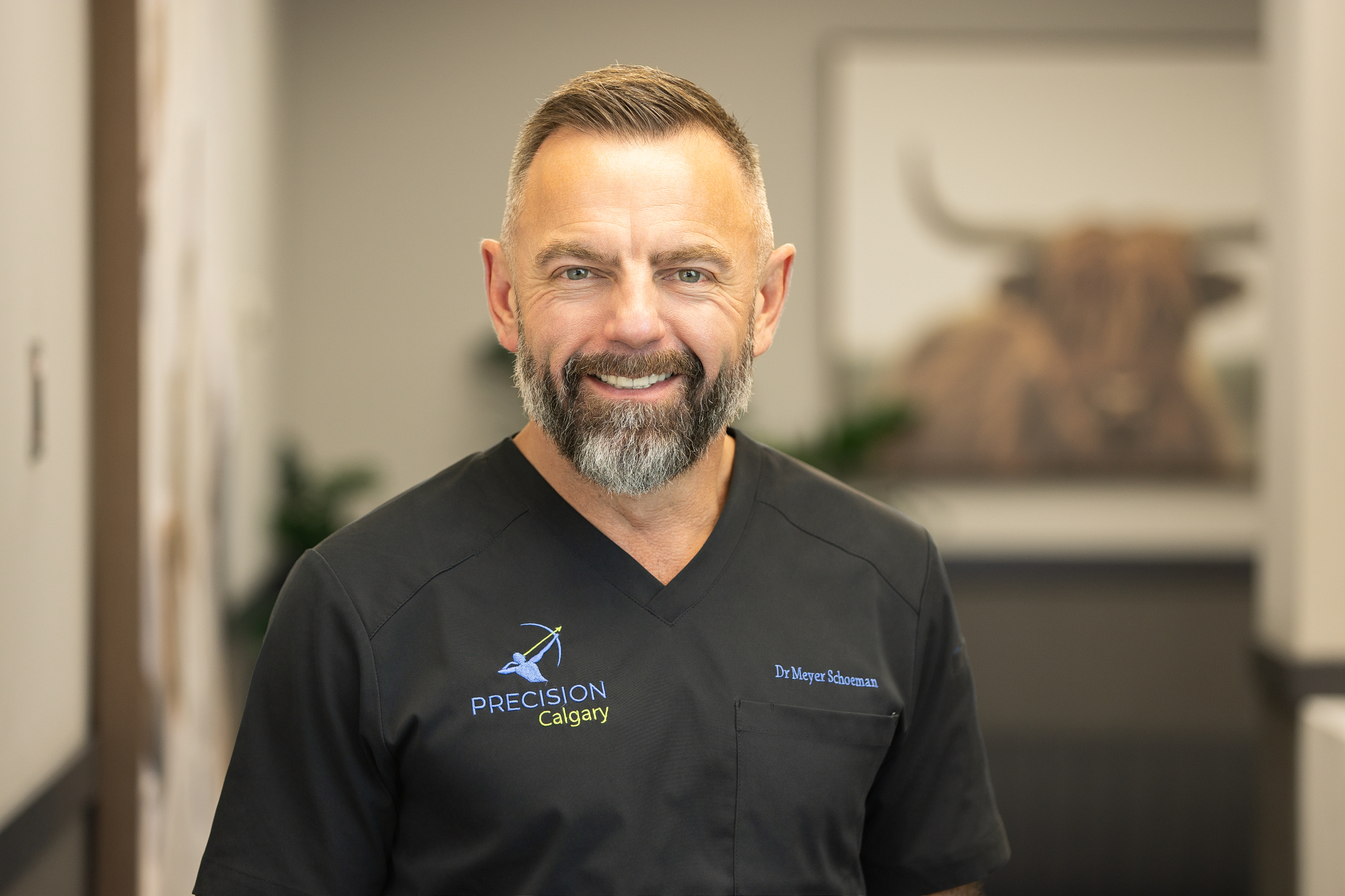

Testosterone Replacement Therapy in Calgary
Book a consult today
Consultation
The procedure
TRT can help men with low testosterone regain sensual function, support overall health and energy levels, as well as mood and mental function.
Testosterone levels generally peak during adolescence and early adulthood. As you get older, your testosterone level gradually declines — typically about 1 percent a year after age 30 or 40. It is important to determine in older men if a low testosterone level is simply due to the decline of normal aging or if it is due to a disease (hypogonadism).
Hypogonadism is a disease in which the body is unable to produce normal amounts of testosterone due to a problem with the testicles or with the pituitary gland that controls the testicles. Testosterone replacement therapy can improve the signs and symptoms of low testosterone in these men. Doctors may prescribe testosterone as injections, pellets, patches or gels.
A low testosterone level by itself doesn’t need treatment. Only men with symptoms of low testosterone and blood levels that confirm this as the cause of symptoms should consider testosterone replacement therapy. Talking with your doctor is the only way to know if testosterone therapy is right for you.
How TRT works
The Precision Sexual Health Clinic Testosterone Replacement Therapy program is an evidence-based, patient-centered program designed to deliver testosterone replacement therapy to men in a safe and effective way.
At Precision Calgary, TRT is 100% Physician Administered and Supervised.
Our scientifically validated micro-dosing strategy means you can get the testosterone you need, minimizing the side effects you worry about.
We take a symptom-focused approach to ensure that each man receives a tailored treatment plan for his unique needs. This approach is based on the latest research and aims to help men improve their drive, from the boardroom to the bedroom.
for immediate results.
TRT Benefits in Calgary
The ideal outcome from TRT is to regain sexual function, energy and clarity of mind. Some men experience a strong change. Others get limited benefits.
- Many men report improvement in energy level, sex drive, and quality of erections.
- Testosterone also increases bone density, muscle mass, and insulin sensitivity in some men.
- Men often report an improvement in mood and confidence from testosterone replacement.
- Men also may be able to focus better, and see improvements in memory and cognitive skills.
Testosterone therapy at Precision Clinic Calgary is fully administered and overseen by our physician.
Conditions Treated With TRT
Low Testosterone
Calgary Testosterone Replacement Therapy FAQ
We don’t recommend TRT for people with the following conditions:
- Congestive heart disease.
- Suspicion of prostate cancer.
- Severe urinary conditions.
- TRT can only benefit those who have low testosterone.
There is insufficient research to fully understand the long-term effects of TRT. Low level side effects can include rash or itching where a gel or patch is applied. There are some concerns related to heart attack and stroke.
Though not empirically proven, there is concern that TRT might stimulate the growth of prostate cancer cells.
Medical providers agree that monitoring patients is an essential element of a responsible treatment plan.
Procedure details

Subcutaneous Testosterone Micro-Dosing
Our preferred protocol delivers testosterone via low-volume subcutaneous injection, typically daily or every other day. This pharmacokinetic approach minimizes peak-to-trough fluctuation compared to traditional depot IM dosing, producing stable serum levels with fewer androgenic side effects. Subcutaneous administration also reduces injection discomfort and supports patient self-administration.

HCG (Human Chorionic Gonadotropin) — Fertility Preservation & Testicular Function
For men concerned about fertility or testicular atrophy during TRT, HCG co-administration is a central part of our protocol. HCG acts as an LH analogue, maintaining intratesticular testosterone production and preserving Leydig cell function. This more closely approximates endogenous male physiology than testosterone monotherapy alone.
HCG is also available as monotherapy for men who wish to raise serum testosterone while fully preserving the HPG axis — the only Health Canada–approved non-testosterone option for Testosterone Deficiency Syndrome, and included in the 2021 CUA Guidelines.

SERMs & Enclomiphene — Non-Suppressive Testosterone Optimization
Selective Estrogen Receptor Modulators (SERMs) stimulate endogenous testosterone production by blocking hypothalamic and pituitary estradiol feedback, increasing LH and FSH secretion without exogenous androgen administration. This approach preserves spermatogenesis and is particularly well-suited for younger men, men planning fertility, or those who prefer to avoid exogenous testosterone.

Aromatase Inhibitors (AIs)
Where excess aromatization leads to elevated estradiol — common in men with higher adiposity — aromatase inhibitors may be incorporated to optimize the testosterone-to-estradiol ratio and mitigate estrogenic side effects

Topical Testosterone (Androgel 1%)
For men who prefer to avoid injections, daily topical application to the upper arms, shoulders, or abdomen remains an effective alternative. Patients are counselled on the risk of passive transference to partners and children (virilization), and on associations with increased PSA and acne.
Potential Side Effects
- Most men who are prescribed testosterone by their urologist, endocrinologist or family physician are usually prescribed a depot dose given every 3-4 weeks. This dosing strategy can contribute to many unwanted treatment effects.
- Long-term use of testosterone in this way may cause reversible side-effects such as hot flushing and acne, and other effects such as breast enlargement, hair loss and testicular atrophy can be permanent.
- Concerns have been raised linking testosterone therapy to prostate cancer, infertility, cardiovascular disease and venous thromboembolism but these treatment effects are either unproven (prostate cancer), rare (venous thromboembolism) or are manageable by way of appropriate patient selection and monitoring (cardiovascular disease and infertility).
- Our TRT program has been designed to monitor for and minimize the potential harms of testosterone replacement therapy.